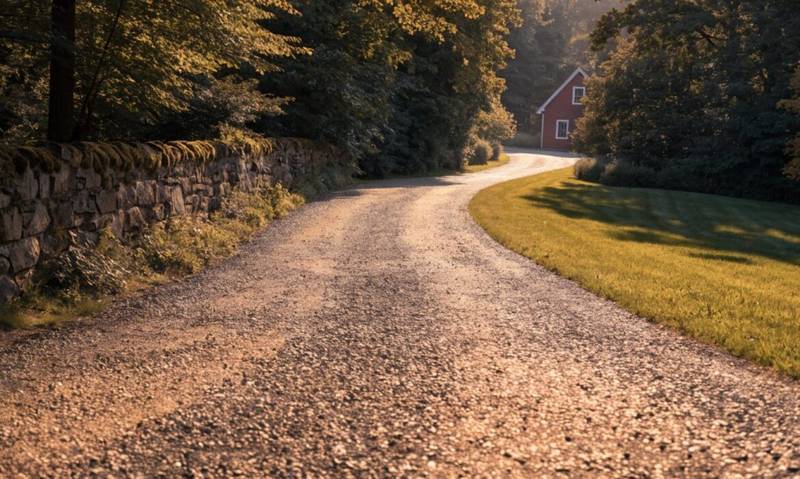
If you live on a long, winding lot in Litchfield County or a hillside property near the Quiet Corner, you’ve probably priced out asphalt and winced. Gravel is cheap, but it washes out, ruts in mud season, and ends up scattered across your lawn every spring. Somewhere between those two sits an old-school option that’s quietly making a comeback: the tar and chip driveway.
Below, we’ll walk through what it costs, how long it really lasts, and whether it can stand up to a Connecticut winter.
What Is a Tar and Chip Driveway?
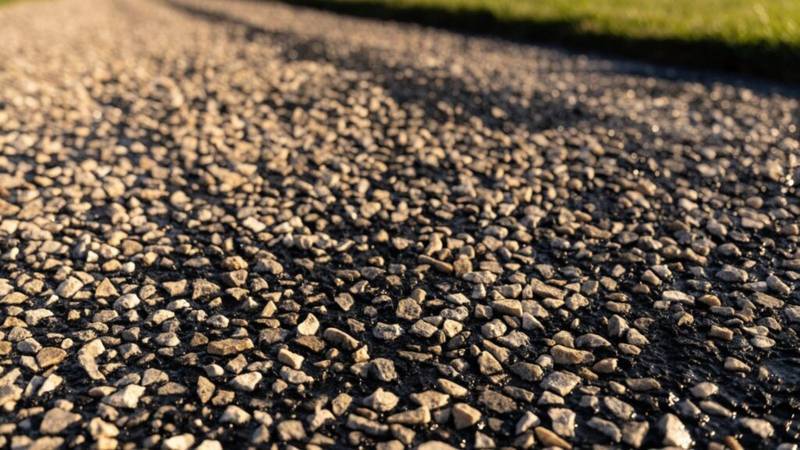
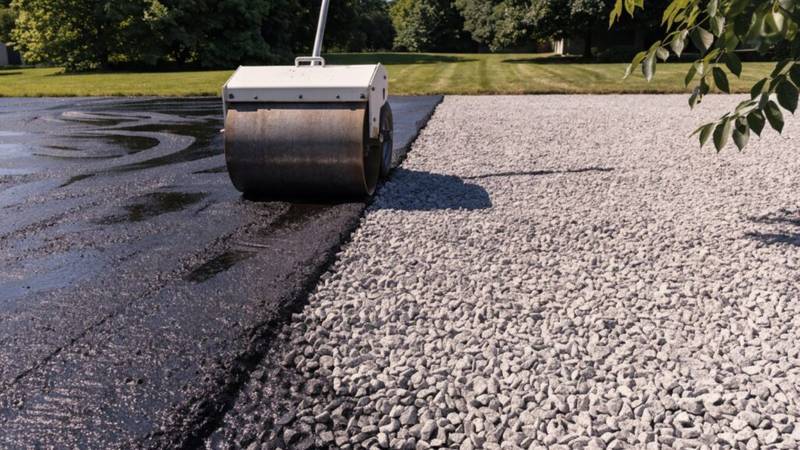
Tar and chip goes by a few names. It’s also known as macadam, chip seal, and oil and stone, and it consists of hot liquid asphalt layered with crushed stone or aggregate, which gets compacted before the asphalt hardens.
The result looks like a gravel driveway but drives like a paved one. The stones stay locked in place, so you get a rustic, textured surface without the ruts and loose rock. Many homeowners pick a stone color, such as tan, gray or a warm brown, to match their house or stone walls. That’s a big part of why tar and chip suits Connecticut’s colonials, farmhouses and wooded lots.
How Much Does a Tar and Chip Driveway Cost?
Nationally, the average cost of a tar and chip driveway is $3 per square foot, but it ranges between $1 and $5 per square foot overall. Some 2026 guides put it higher. One estimates that buyers typically pay between $3.50 and $8.00 per square foot, depending on surface prep, traffic, and regional labor rates.
Connecticut usually lands in the middle-to-upper part of that range, because labor costs are higher and fewer crews do this kind of work. As a rough example, a standard 12-by-50-foot driveway (600 square feet) would cost about $1,800 at $3 per square foot and about $3,600 at $6.
For comparison, standard asphalt driveways tend to cost $3 to $6 per square foot and concrete can run $4 to $15 per square foot.
What drives your final price:
- Base condition. A failing gravel base needs regrading and new stone before any tar goes down. Grading and leveling cost $5 to $8 per square foot, which can easily cost more than the surface itself.
- Number of layers. A double chip seal costs more up front but holds up much better than a single coat.
- Stone type and color. Local crushed stone is the cheapest choice. Specialty or decorative stone costs more.
- Oil prices. Material availability and the current price of oil will affect the cost of tar and chip driveways.
- Size, shape and slope. Curves, steep grades and tight access all add labor time.
- Permits. Many Connecticut towns require a permit for work where your driveway meets the road, so check with your local public works or building department before you book a crew.
How Long Does Tar and Chip Last?
Expect roughly a decade. Installed correctly, a tar-and-chip driveway can last about 10 to 15 years, while other sources say that tar-and-chip driveways typically last around 7 to 10 years before needing a refresh, shorter than the 15–20 year lifespan of asphalt.
Where your driveway falls in that range depends on three things: how well the base was built, how much traffic it gets, and how it’s treated in winter. If you want to get closer to the upper end of the lifespan, you’ll need to install it in a lower-than-average vehicular traffic area.
The good news is that you don’t have to tear it out when it wears down. A worn tar and chip surface can usually be refreshed with a new layer of tar and stone. Resurfacing a tar and chip driveway costs between $2 and $5 per square foot.
Is Tar and Chip Right for Connecticut?
This is where things get local. Connecticut sees regular freeze-thaw cycles, road salt and plenty of plowing, and all three are hard on any driveway. Here’s how tar and chip measures up.
Where It Shines in CT
- Traction on hills: The texture of tar-and-chip paving makes for better traction when the surface is wet or snow-covered. Both asphalt and concrete are more slippery than tar-and-chip. If you’ve ever slid down an icy driveway in Tolland or Fairfield County, you’ll appreciate that grip.
- Cost on long driveways: Rural lots with 300-foot drives are where the savings over asphalt really add up.
- Curb appeal: It blends naturally with stone walls, old barns and wooded settings, and it looks right on historic properties where shiny blacktop can seem out of place.
Where It Struggles
- Snowplows: This is the biggest concern for Connecticut homeowners. Tar and chip can be easily damaged by heavier vehicles, especially snow plows. A steel blade set too low can tear loose stones out of the surface.
- Temperature swings: Tar can soften and shrink in areas with extreme temperature fluctuations, which can loosen the chips over time.
- A short installation window: The job must be done in dry weather, after the ground gets above 50 degrees F and before the leaves fall. In Connecticut, that generally means late spring through early fall, and good crews book up fast.
- Loose stones: Expect some stray chips along the edges, especially during the first season.
The Verdict for CT Homeowners
Tar and chip is a smart choice if you have a long or sloped driveway, a moderate budget, light car traffic, and a plow service willing to adjust its approach. Ask your plow contractor to raise the blade slightly or use a rubber-edged blade.
You’ll probably be happier with asphalt if you rely on aggressive commercial plowing, want a smooth surface for kids to play on, or plan to stay in the home 20 years or more without resurfacing.
Simple Maintenance Tips
- Tell your plow contractor it’s a chip seal surface before the first snowfall.
- Use plastic shovels instead of metal-edged ones.
- Sweep loose stones back onto the driveway in spring.
- Keep drainage clear so water doesn’t pool and freeze under the surface.
- Plan to add a fresh chip layer when bare spots start to appear, before they turn into potholes.
FAQ
Can tar and chip go over an existing asphalt driveway?
Often, yes, as long as the old asphalt is stable. Cracks, potholes and soft spots need repair first. A good contractor will check the base before quoting the job.
Is tar and chip cheaper than asphalt?
Usually. The upfront cost is lower, but it needs refreshing sooner, so the gap narrows over 20 or 30 years.
Can I install tar and chip myself?
It’s not a DIY job. It’s incredibly complex and involves extreme heat, along with heavy rollers and tons of stone.
When is the best time to install a tar and chip driveway in Connecticut?
Aim for late May through September, when it’s warm and dry. Book your contractor in winter or early spring to get a spot.
Does tar and chip need sealcoating like asphalt?
No. Sealcoating would coat the stones and hide the texture that gives tar and chip its grip and look. Instead, you refresh it with a new layer of tar and stone when it wears.