
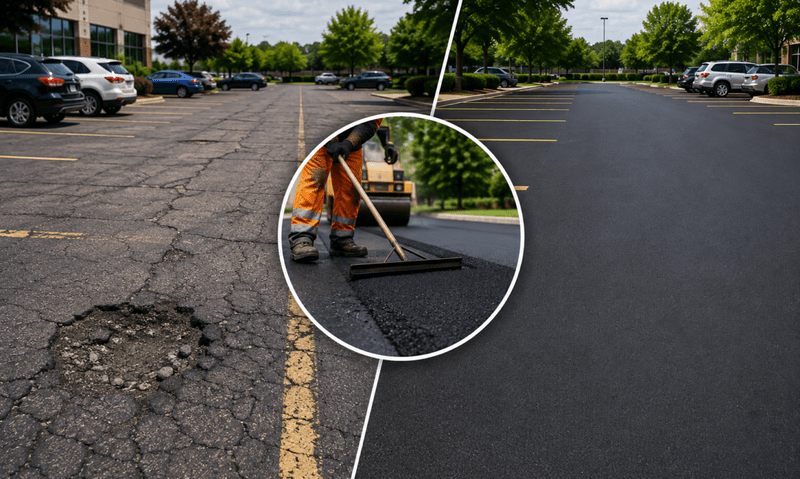
A properly maintained parking lot is more than just a place where vehicles are parked. It provides a safe, friendly and professional customer, employee, tenant and visitor environment. With time though, asphalt may become damaged due to constant traffic, weather, exposure to water, and natural wear. Although minor damage may be easily fixed, at some point, parking lot repaving would be a more appropriate long-term solution. Commercial paving can also help property owners maintain a durable and professional-looking parking area that can handle regular vehicle traffic.
Being aware of the warning signs can enable property owners to deal with issues before they turn out to be costly or pose safety risks. The following are seven considerations to make when deciding whether your parking lot needs to be repaved or not. Regular maintenance, including Driveway Sealing where applicable, can also help protect asphalt surfaces and extend their useful life.
Extensive Cracks Across the Pavement
One of the most obvious signs of asphalt wear is cracks. Minor cracks on the surface might not need a total repaving, but when the cracks are extensive or interlinked, it can be a sign of structural issues.
Search alligator cracking, a pattern of interconnected cracks that look like reptile scales. This kind of damage usually occurs when the foundation of the pavements is weak or incapable of bearing the traffic loads. Massive longitudinal or transverse cracks may also enable water to seep under the asphalt.
When a large area of your parking lot is covered with cracks or when they keep appearing even after you have repaired them, repaving can be more economical than patching the same spots over and over again.
Numerous Potholes and Failed Repairs
Potholes are created when water gets into the cracks and undermines the layers of asphalt. When the vehicles pass over these weakened sections over and over again, chunks of pavement fall off, forming holes.
A couple of potholes can be easily fixed. Nevertheless, when your parking lot is full of potholes on the property or when the previously repaired places are starting to collapse, the pavement structure might be destroyed.
Regular patching may turn into a short-term fix to a bigger issue. In cases where repair appears to be a recurrent cost, a professional parking lot Paving contractor may consider the possibility of repaving giving a more permanent solution.
Uneven or Depressed Areas
Your parking lot should have a relatively smooth, stable surface. When you see dips, depressions, ruts or places where the pavement has settled then there is a possibility that there is some trouble beneath the surface.
Poor drainage, soil movement, heavy traffic of vehicles or degradation of the base may result in uneven pavement. Existing pavement damage is aggravated by these areas being able to gather water following rain.
Depressions can cause poor driving conditions and pose a higher risk of journeys and falls to pedestrians. When the uneven areas are prevalent, merely putting another layer of asphalt on top of the uneven ones might not resolve the problem. It may require proper preparation and repaving of the parking lot to create a stable surface.
Standing Water After Rain
One of the largest Asphalt Pavement threats is water. The parking lot should be designed in a way that it directs the rainwater to the right drainage systems and not letting it stay on the surface.
When you are used to seeing puddles or standing water following rain, notice where they are and how long they last. Chronic puddles can be a sign of inadequate drainage, depressions on the surface or insufficient slope.
Water that seeps into cracks multiple times can undermine the pavement base and hasten degradation. The solution to drainage issues during a repaving project can be used to safeguard the new pavement and increase its life.
Faded, Worn, or Deteriorating Asphalt
Asphalt naturally becomes colored due to aging. New asphalt is usually dark and rich in color, whereas the old pavement turns gray over time as the sun and weather erode the asphalt binder.
Worn-out pavement is not always an indication that your Parking Lot Requires Repaving. But extreme discoloration with cracking, crumbling edges, potholes or deterioration of the surface is a more powerful warning.
When the asphalt is rough, crumbling, or loses its aggregate, the surface might be at the later stages of its useful life. This is where resurfacing or total repaving can be considered based on the state of the pavement beneath.
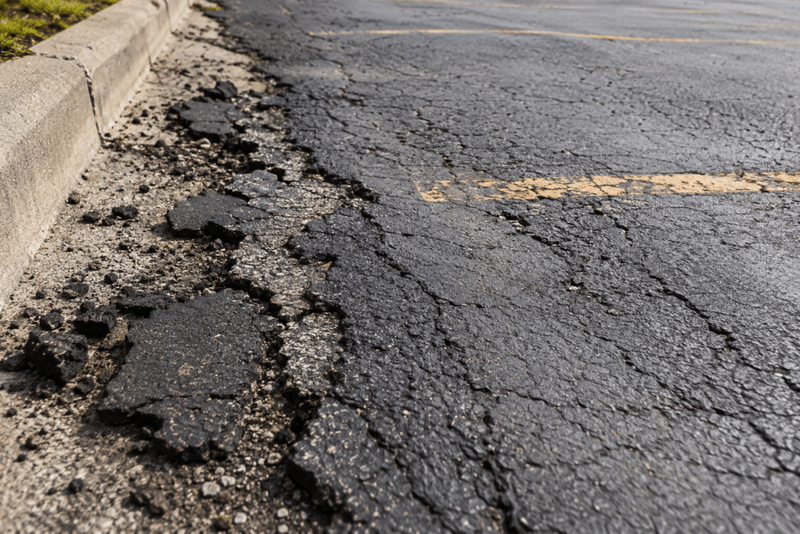
Damaged Edges and Crumbling Pavement
The edges of parking lots are subject to a lot of stress. Cars can park or drive too near the edges and when they do not have the necessary support, the asphalt may disintegrate.
Search in crumbling edges, loose asphalt, broken pavement along curbs and places where the surface seems to be separating. The degradation of edges may enable water to get under the pavement and lead to further damage.
When the edge issues are being experienced in a large area of the parking lot, it might be a sign that the pavement system requires more than just a few isolated repairs. When repaving, experts are able to rectify the damaged parts and enhance the pavement structure where it is required.
Your Parking Lot Is Reaching the End of Its Lifespan
Even a properly taken care of parking lot will one day need significant rehabilitation or replacement. The life of asphalt is determined by the traffic, climate, drainage, quality of installation, maintenance, and the materials.
When your parking lot is older and has a number of signs of deterioration simultaneously, it might be more feasible to think about repaving instead of applying individual repairs. A professional pavement evaluation can assist in deciding whether your property requires crack sealing, patching, resurfacing or total replacement.
Commercial properties should particularly plan ahead. Delaying until pavement is in a very bad condition may result in increased expenses, traffic congestion and even safety problems. Planning an assessment prior to the damage being widespread can provide you with additional choices in preserving the property.
Make the Right Decision for Your Parking Lot
Being aware of the symptoms of pavement failure can guide you to make a decision in time regarding parking lot repaving. Large cracks, potholes, uneven surfaces, standing water, extreme fading, crumbling edges, and old-fashioned surfaces are all reasons why you should have your parking lot professionally assessed.
Repaving is an expensive exercise, but timely correcting pavement issues can enhance safety, aesthetics, drainage, and durability. Property owners should not keep paying to have their pavement repaired temporarily, but should look at the overall state of the pavement and the probable cost of further maintenance.When you observe some of these red flags, then book a professional parking lot inspection. A professional paving company will be able to evaluate the surface and the underlying structure and suggest the best solution to your property.