
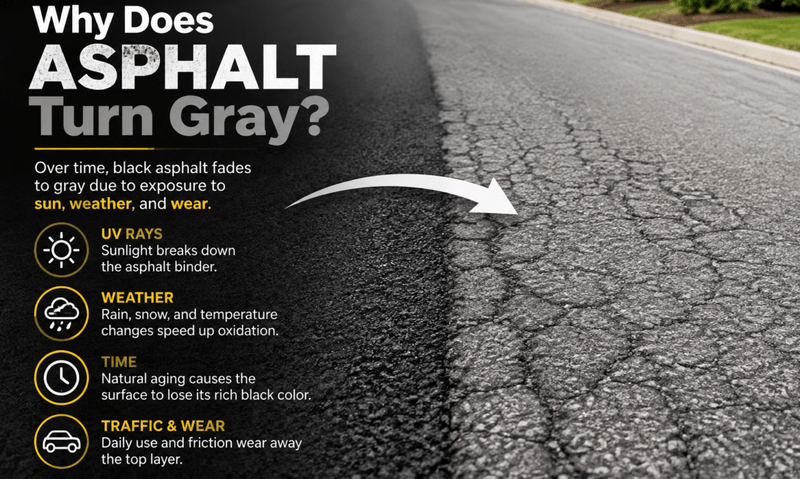
Asphalt is one of the most popular paving materials for driveways, parking lots, roads, and commercial properties because of its durability, affordability, and smooth appearance. However, a lot of property owners observe that their previously dark asphalt surface becomes gray with time. Although this color change is normal, it usually creates questions whether the pavement is aging normally or exhibiting some damage.
The graying of asphalt is normally due to oxidation, weathering, wear on the surface, and natural aging. Learning about the reasons behind asphalt color change can assist property owners in taking appropriate maintenance measures to increase the lifespan of pavement and ensure that surfaces remain presentable.
Asphalt Oxidation: The Main Reason Asphalt Turns Gray
Oxidation is the most prevalent cause of asphalt graying. The oils and binding agents contained in asphalt gradually disintegrate when they are exposed to oxygen. These oils make fresh asphalt have a dark black look and flexibility.
With time, the asphalt binder becomes hard and loses its rich color due to oxidation. The surface becomes old and the pavement turns dark gray, and then progressively to a light gray.
Oxidation is a natural process which cannot be avoided fully, but it can be slowed down by regular asphalt maintenance. Sealcoating is one of the best methods to shield asphalt against exposure to oxygen and maintain its appearance.
Sunlight and Weather Exposure Affect Asphalt Color
Another significant cause of asphalt discoloration is constant exposure to sunshine. The chemical compounds of asphalt are broken down by ultraviolet (UV) rays of the sun, leading to the fading of the surface.
Properties in regions with high sunlight or extreme weather conditions tend to change color very fast. Asphalt aging can also be caused by rain, snow, changes in temperature, and exposure to moisture.
Water penetrating in small cracks and weak points may hasten the pavement deterioration. The changing of the seasons makes asphalt expand and contract; this can result in damage to the surface and a worn out look.
Weather conditions are inevitable, but with good asphalt maintenance, the effects of exposure to the environment are minimized, and the pavement remains stronger over a longer duration.
Normal Aging and Asphalt Wear
Similar to any construction material, asphalt does wear out as it gets old. New asphalt has a lot of binder that forms a smooth, dark, and flexible surface. The surface slowly loses some of its original properties as vehicles drive over the pavement and years go by.
A significant source of asphalt aging is traffic. Friction caused by heavy vehicles, frequent driving, and parking lot activity erodes the top layer of asphalt. This reveals the lighter-colored aggregates under the surface, so the pavement looks gray.
Worn out asphalt does not necessarily mean that it needs to be replaced immediately. Simple repairs, sealcoating, resurfacing, or full replacement of pavement can be decided by professional inspections.
Mineral Aggregates Become More Visible Over Time
Asphalt pavement is a blend of asphalt binder and mineral aggregates (crushed stone, gravel, and sand). These materials are held together by the binder and give the dark appearance of fresh asphalt.
The binder wears, and the aggregates become more prominent as the pavement ages. Since these materials naturally have lighter colors, the surface begins to look gray instead of black.
This is particularly evident in busy places like commercial parking lots, busy driveways, and roads. Exposed aggregates are a normal process of asphalt aging, but when the pavement is overly exposed, it could be a sign that the pavement requires maintenance.
Poor Maintenance Can Speed Up Asphalt Fading
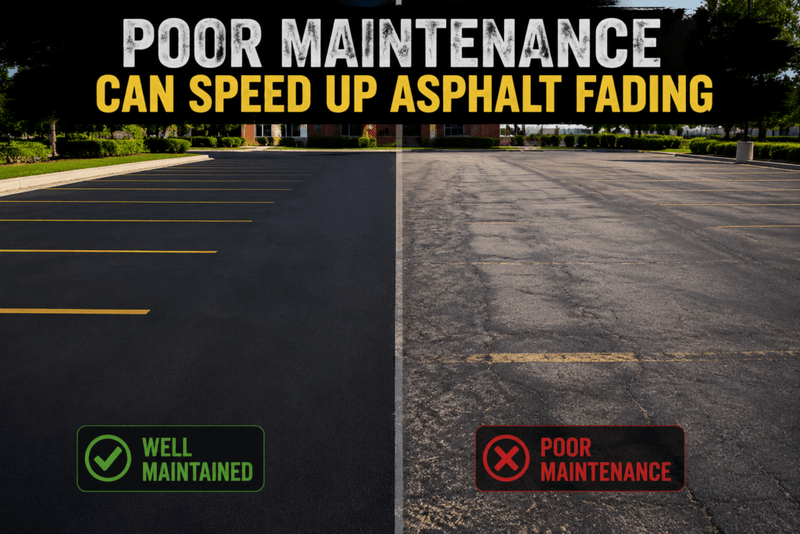
Regular maintenance is also significant in safeguarding asphalt surfaces. Asphalt may lose its strength and color without proper care, and it may happen much faster.
Small cracks, water damage, oil stains, and surface wear can all contribute to faster deterioration. For example, oil and chemical spills can break down the asphalt binder, creating weak spots and making the pavement appear aged.
Routine maintenance activities like crack sealing, asphalt cleaning, and sealcoating are used to prevent damage to the pavement. Sealcoating provides a protective coating that guards against UV rays, moisture, and chemicals, and gives it a darker look.
By investing in preventative maintenance, property owners can save the cost of repairing their asphalt pavement and prolong the lifespan.
Can Gray Asphalt Be Restored?
The question that many property owners ask themselves is whether gray asphalt can be restored back to its initial black color. Yes, in most instances, depending on the state of the pavement, it can be restored.
One of the best ways of restoring faded asphalt is by sealcoating. It coats the surface with a protective layer, enhances the curb appeal, and offers extra security against weather and traffic damage.
Sealcoating is, however, not applicable in cases of severely damaged asphalt that has deep cracks, potholes, or structural issues. Under such circumstances, professional asphalt repair or resurfacing might be necessary.
A paving contractor can assess the state of the pavement and suggest the most appropriate solution, depending on its age, level of damage, and use.
How to Prevent Asphalt From Turning Gray Too Quickly
Even though asphalt will fade away with time, there are a few measures that can be taken to reduce the rate of asphalt fading, to ensure that asphalt looks cleaner and newer.
Frequent inspections enable property owners to detect issues before they escalate. Early repair of cracks will prevent the intrusion of water into the pavement structure that leads to further damage.
Sealcoating every few years, based on use and weather conditions, can help to guard against oxidation and UV rays on your asphalt. Premature aging can also be prevented by keeping the surface clean and removing oil spills quickly.
Understanding why asphalt turns gray allows property owners to make informed decisions about pavement care. With regular maintenance and timely repairs, asphalt surfaces can remain functional, attractive, and long-lasting for many years.