
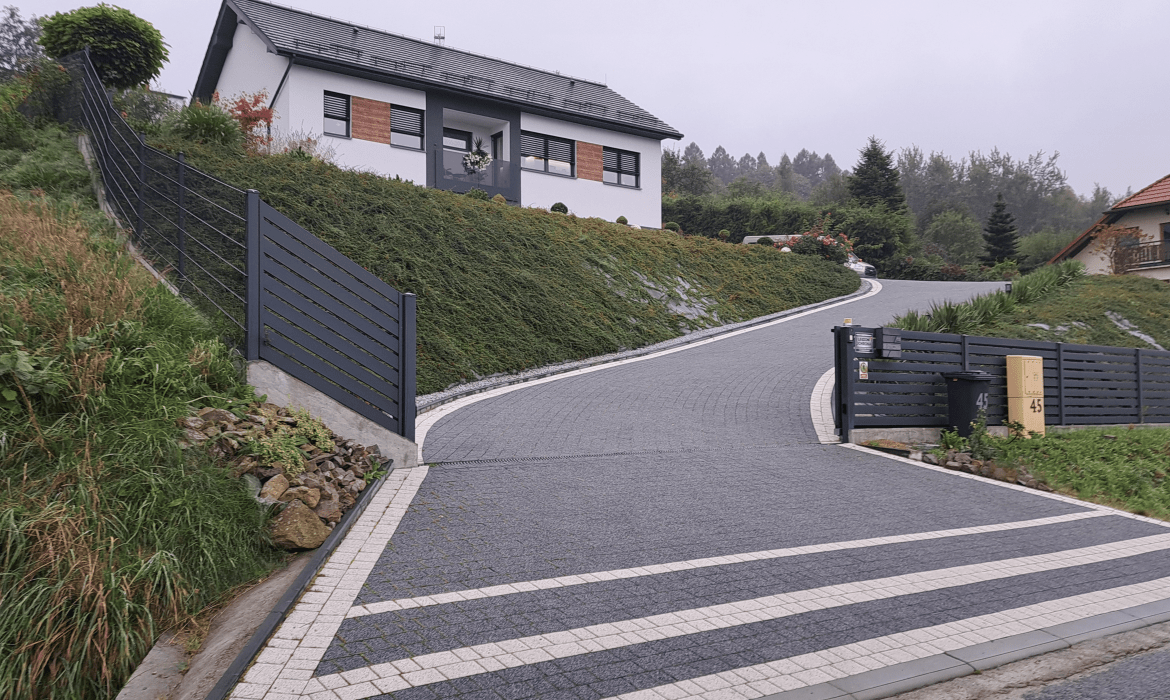
If you have an asphalt driveway, sealcoating is one of the most important maintenance steps you can take. Many homeowners ask the same question: how often should you sealcoat a driveway? The answer depends on several factors, including climate, traffic, and the condition of your asphalt.
In this guide, we’ll break down everything you need to know about driveway sealcoating frequency, why it matters, and how to tell when it’s time to reseal your driveway.
What Is Driveway Sealcoating?
Sealcoating is a process of applying a protective coating on your driveway which is made of asphalt.
This layer is used to prevent:
- UV rays from the sun
- Water and moisture
- Oil and chemical spills
- Snow, ice, and road salt
- Daily wear and tear
With time the asphalt decomposes through exposure to the elements. Sealcoating prolongs the existence of your driveway and makes it look fresh and black.
Without regular sealcoating, asphalt can dry out, crack, and eventually develop potholes. That’s why understanding how often to sealcoat a driveway is essential for long-term durability.
How Often Should You Sealcoat a Driveway?
General Recommendation
Most experts recommend sealcoating an asphalt driveway every 2 to 3 years.
This is a good time period when considering the average residential driveway that has a medium rate of traffic and has average weather exposure. However, it is not a universal rule.
A number of variables may alter the frequency of sealcoating your driveway.
Factors That Affect Sealcoating Frequency
Climate and Weather Conditions
Weather plays a major role in asphalt driveway maintenance.
- The snow, ice and salt will destroy the asphalt more quickly in regions with harsh winters.
- During hot dry seasons, UV rays are capable of drying the surface and making it dry.
- Rain and moisture may cause the foundation to be weak.
In areas where weather conditions are severe, then you might be required to sealcoat your driveway after every 2 years rather than 3.
Amount of Traffic
A driveway that sees heavy use will wear down faster.
For example:
- Several cars parked on a day-to-day basis.
- Large trucks or RVs.
- Frequent visitors.
The heavier and more the movement on the surface, the faster is the degradation of the protective layer. It is often better to sealcoat after every 2 years in high-traffic conditions.
Age of the Driveway
Sealcoating should not be done on new asphalt driveways.
New asphalt requires time to dry. As a rule, the first sealcoat should be applied 6-12 months after installation. Then you can have a normal 2-3 year schedule.
Elderly driveways can be in need of more care and particularly in case the cracks are developing.
Signs Your Driveway Needs Sealcoating
Even if you’re following a schedule, it’s smart to watch for visible warning signs.
Fading Color
When the asphalt becomes gray instead of the deep black it is an indication that it is oxidizing. It is among the initial indicators that your driveway requires a sealcoating process.
Small Surface Cracks
As the surface dries off, hairline cracks could be visible. Sealcoating could be used to prevent additional damage but big cracks are better repaired before sealcoating.
Rough or Brittle Texture
In case the surface is dry, rough or brittle, it might no longer be sufficiently protected.
Water Soaking Into the Surface
A driveway that has been well sealed must have the water bead on the surface. In case water gets absorbed fast, it is time to get another coat.
Benefits of Regular Driveway Sealcoating
Sealcoating your driveway at the appropriate time has a number of long-term benefits.

Extends the Life of Your Asphalt
Sealcoating your driveway on a regular basis can greatly extend its life. Maintenance can also make your asphalt last 20 years or longer instead of having to replace it with another one every 10-15 years.
Prevents Costly Repairs
The cracks may become huge cracks and potholes within a short time. Sealcoating also minimizes water infiltration and defers decay and saves you the costs of significant repairs.
Improves Curb Appeal
A newly sealcoated driveway is clean, smooth and dark black. This makes your house look better and the value of the property can also go up.
Protects Against Oil and Chemical Damage
The driveways are exposed to oil leaks; gasoline drops and other motor fluid spills. Sealcoating provides a protective layer that eases cleaning of spillages and minimizes staining.
Can You Sealcoat Too Often?
Yes, sealcoating also can be an issue too often.
There is no need to apply a new coat annually and this could result in accumulation. Layers applied in excess may be peeling or flaking in the long run.
It’s best to stick to the recommended 2–3-year interval, unless your driveway shows clear signs of needing attention sooner.
Best Time of Year to Sealcoat a Driveway
Timing is as important as frequency.
The best time to sealcoat a driveway is during late spring through early fall when:
- The temperatures are always more than 50 deg F.
- At least 24 hours without rain.
- The humidity is average.
- Dry and warm weather enables the sealcoat to dry adequately and attach itself to the asphalt.
Sealcoating should not be done during hot weather or immediately before winter because it may not cure properly.
Professional vs. DIY Sealcoating
The question that arises among the homeowners is whether to sealcoat their driveway or should they engage a professional service.
DIY Sealcoating
Pros:
- Lower upfront cost
- Convenient scheduling
Cons:
- Time-consuming
- Means that it must be well prepared on the surface.
- Risk of uneven application
Professional Sealcoating
Pros:
- Even, high-quality finish
- Appropriate filling and preparation of cracks.
- Longer-lasting results
Cons:
- Higher initial cost
When your driveway is cracked, the surface is damaged, or has not been taken care of on a regular basis, it is normally better to hire a professional.
Sealcoating vs. Resurfacing: What’s the Difference?
Sealcoating is preventative maintenance. It protects the top layer of asphalt.
Resurfacing, however, is a process that entails the addition of a new layer of asphalt on the existing surface. This is required in cases where the damage is more serious.
If your driveway has deep cracks, potholes, or structural issues, sealcoating alone won’t fix the problem. In that case, resurfacing or repairs may be necessary before applying a sealcoat.