
Roads are an essential part of modern transportation. They link cities, towns, neighborhoods, and businesses and make traveling easier and safer. But roads do not just come out of the blue. They are well designed, constructed and maintained by a process called road paving. The term is heard by many people, but what it is, they do not know.
Simply, paving roads involves the establishment of a smooth and durable road surface through which vehicles, bicycles, and pedestrians can move without any harm. It is done by making the ground ready, placing heavy foundation material and using materials like asphalt or concrete to form a durable road.
Knowing what is meant by paving roads makes people value the engineering, planning, and maintenance involved in creating dependable transportation systems. It can be the street in a neighborhood, the highway, or the parking lot in a commercial area, but correct paving contributes significantly to the safety, comfort, and accessibility.
What Does Paving Roads Mean?
Paving roads can be defined as the process of building or coating a road with hard materials to form a stable and smooth surface to drive on. The idea is to ensure that roads are robust to handle the daily traffic, weather changes, and heavy loads.
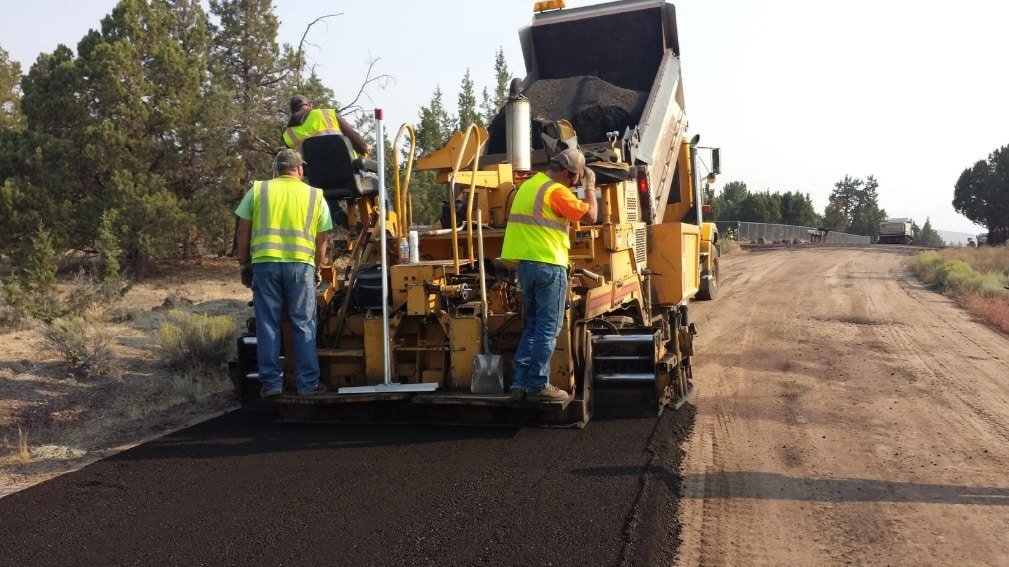
Paving of roads is more than just a simple laying of asphalt. Engineers work on the site before the surface is installed by leveling the ground, enhancing drainage and constructing a strong base on which the pavement is to be installed. After these measures have been undertaken, the paving material is laid, rolled and smoothed to form a smooth surface.
A well tarmac road is not only comfortable to drive on, but also minimizes the wear and tear on the vehicles. It also assists in enhancing traffic and reduces the risks of accidents due to uneven or damaged roads.
Why Is Road Paving Important?
Road paving provides benefits that go far beyond appearance. It enhances transport, boosts the economy and improves citizen security.
Enhanced safety is one of the greatest benefits of paved roads. With smooth roads, tires have better traction and drivers have an easier time controlling their vehicles. They also minimize the chances of accidents due to potholes, loose gravel or uneven surfaces.
Driving comfort is also enhanced by paved roads. Cars vibrate less and travelling becomes more enjoyable and puts less pressure on the suspension systems and tires.
Another important benefit is durability. The paving materials used are of quality to withstand years of traffic and weather changes. Even though roads are supposed to be maintained every now and then, well paved roads normally last longer than the unpaved roads.
Companies also depend on reliable transportation systems to transport goods and deliver services. Properly maintained roads ensure that traveling is quicker and that local and regional business is facilitated.
Common Materials Used for Paving Roads
There are a number of materials that are employed in the construction of roads, although the most common are asphalt and concrete.
Asphalt is a highly favored paving material due to its affordability, versatility, and comparatively fast installation. It offers a good driving surface and is less difficult to repair compared to most other materials. Asphalt roads are common in residential areas, city streets and highways.
Another popular paving material is concrete. Concrete is very strong and durable although it is normally more expensive in the short run. It can withstand heavy traffic and has a tendency to last decades with proper maintenance. Concrete pavement is used in many of the major highways, runways of the airports and industrial areas.
The Road Paving Process
The first stage is site preparation and surveying. Engineers evaluate the soil, determine drainage requirements, and remove vegetation or debris from the construction area.
The second step is ground grading and leveling by crews to provide a stable base. Drainage is particularly critical since standing water may compromise the road and reduce its life span.
Once the site has been prepared, the base layers are laid down by workers with crushed stone or other hard materials. These layers also spread the weight of traffic and offer structural support.
Lastly, the road would be checked to see whether it is of good quality. When the surface has sufficiently cured or cooled, it is then ready for traffic.
Types of Road Paving
The construction of road pavements is different based on the use of the road and the amount of traffic that is expected.
Local roads are residential roads and are usually made of asphalt due to its cheap cost and smooth surface.
Highways need to be paved with heavy structures that are able to carry thousands of vehicles daily including the heavy commercial trucks.
Special paving is also needed in commercial parking lots and industrial facilities to support high vehicle traffic and heavy machinery.
Paving projects are commonly undertaken by municipal governments to enhance the infrastructure of the people, minimize the cost of maintenance, and to facilitate transport in the communities.
Factors That Affect Road Quality
One of the most crucial factors is the quality of construction. A durable roadway is achieved through proper site preparation, good foundation layers and competent installation.
The weather conditions play a major role as well. Pavement can be eroded by extreme heat, freezing, heavy rain and snow over time.
Another significant factor is the volume of traffic. Highways with heavy trucks and traffic are normally more stressed compared to residential streets.
Periodic maintenance contributes to the life of pavements. Sealing cracks, repairing potholes, filling surfaces and enhancing drainage can help to ensure that small issues do not turn out to be costly repairs.
Environmental Considerations
The warm-mix asphalt technologies have lower production temperatures and this helps in minimizing fuel consumption and greenhouse gas emissions during construction.
The drainage systems also ensure that the surrounding land and waterways are not affected by the rain water since the rainwater is directed away safely. Sustainable paving is a constantly developing practice as communities find sustainable methods to construct and maintain transportation infrastructure.